

Quick answer: with standard grease or E-Z Lube hubs, service wheel bearings every 12 months or 12,000 miles, whichever comes first, with NLGI No. 2 lithium-complex wheel-bearing grease — and never mix grease chemistries.
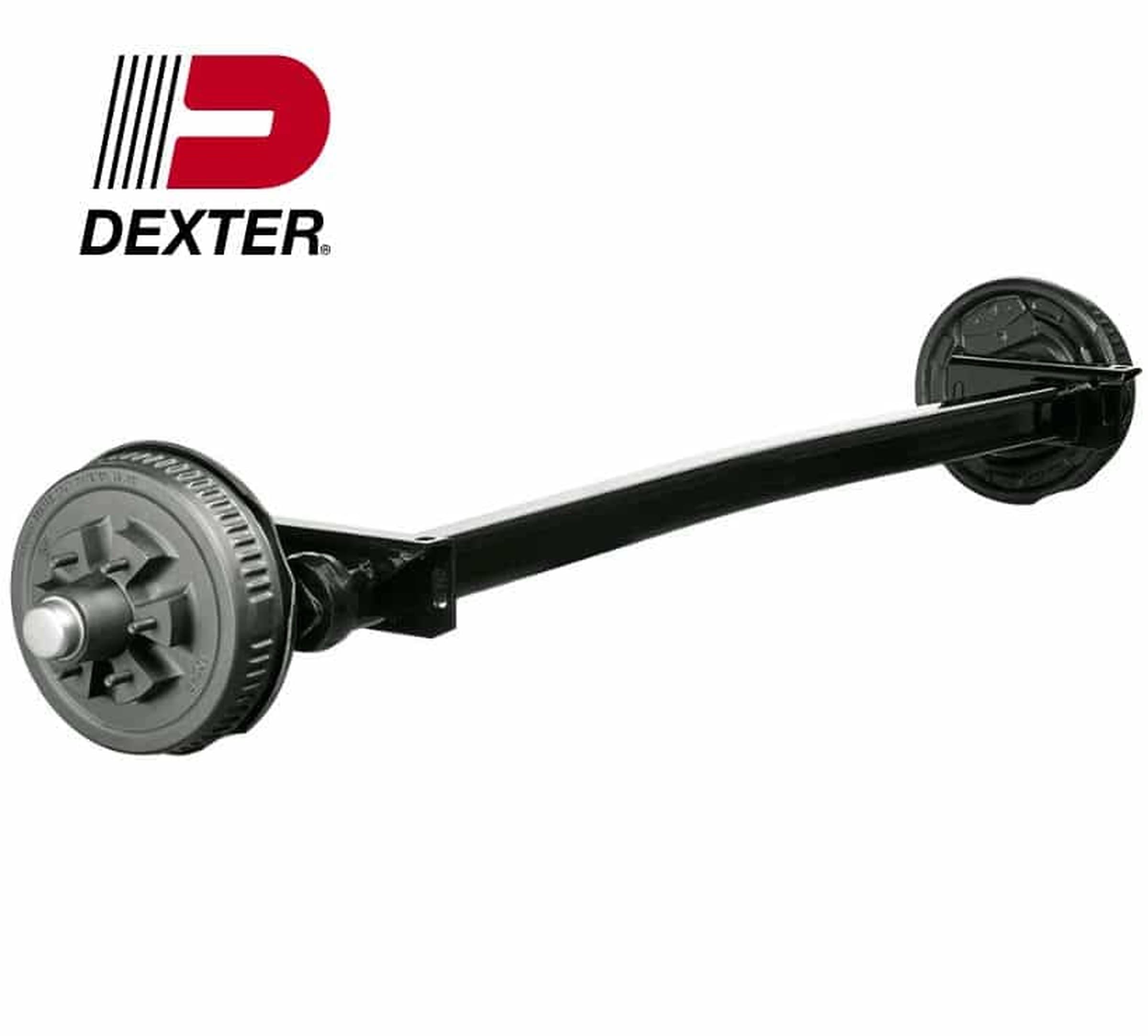
Rugged trailers ride on Dexter Torflex rubber torsion axles. The suspension itself needs almost nothing beyond a fastener check — no leaf springs, no shackles, no metal-to-metal wear points. The hubs, bearings, seals, and tires still follow the normal schedule below.
Explore Rugged’s aluminum utility trailers, aluminum tilt trailers, aluminum deckover trailers, and aluminum enclosed trailers to compare sizes, published specifications, and current prices.
Why bearings matter
Bearings let the wheel spin under load while managing heat. When grease breaks down or contamination gets past a seal, friction climbs, hubs overheat, and failures cascade: seal failure, scored spindles, ruined hubs, and in the worst case a wheel separation. One annual service prevents essentially all of it.
The three hub types on Rugged builds
- Standard grease (tapered rollers): repacked by hand annually. The traditional setup.
- E-Z Lube: grease pumps through the spindle and back out the cap — faster top-offs, same 12-month/12k interval, same periodic inspections.
- Nev-R-Lube (sealed cartridge, some deckover configurations): no greasing; inspect yearly for noise, roughness, heat, or end-play. Not intended for water immersion.
- 01
Open the cap
Remove the rubber plug from the grease cap at the hub center.
- 02
Attach a MANUAL grease gun
Connect to the zerk at the spindle end. Never use a pneumatic gun — high pressure pushes grease past the seal into the brakes.
- 03
Rotate and pump slowly
Turn the hub as you pump so grease distributes across the bearing evenly.
- 04
Stop at clean grease
When fresh grease appears at the cap, stop. Wipe excess, reinstall the plug.
- 05
Road test
Short drive, then feel each hub. Warm is normal; hot is not.
When to replace, not grease
- Grinding or humming from a wheel, a hub too hot to touch, or metal flakes in old grease
- Pitting, spalling, blue heat discoloration, or a damaged cage on inspection
- End-play that correct adjustment does not resolve
- Seals: replace at any nick, tear, or leak — and always when the hub has been off the spindle
- Which hub type does my trailer have?
- Check your build sheet, or call us with your VIN — we can tell you in a minute. Utility models typically run standard or E-Z Lube hubs; some deckover configurations use Nev-R-Lube cartridges.
- What grease exactly?
- NLGI No. 2 lithium-complex, high-temperature wheel-bearing grease with EP and corrosion inhibitors. If you change brands or chemistries, clean out all old grease first — mixed greases can break down.